
WELCOME BONUS 200%
up to €1500 + 200
FREE SPINS
up to €1500 + 200
FREE SPINS
Home → Blackjack
Blackjack at Rakoo Casino: Variants, Rules and Payouts
What a Natural Blackjack Practically Pays Out
The standard payout for a natural blackjack is 3:2, which means a 100 EUR wager returns 150 EUR in winnings. This rate stands in sharp contrast to the 6:5 variant found at this casino, where the same hand yields only 120 EUR. That reduction strips 30 EUR from every winning hand, effectively adding 1.39 percentage points to the house edge. High rollers betting large sums lose significant capital through this specific rule change.
Blackjack 6:5 variants use six decks and offer a lower return of 98.15% compared to the 99.85% of single-deck games. The house edge jumps to 1.85%, making it one of the most expensive rulesets available for players. A $10 bet on a natural pays just $12 instead of the traditional $15, shrinking the reward pool. This mathematical disadvantage compounds quickly for those placing high-stakes wagers.
Liberal Vegas Strip rules provide a much better baseline with an RTP of 99.72% and a house edge of only 0.28%. Players seeking optimal returns should look for tables offering S17, DAS, and late surrender alongside the 3:2 payout. The absence of these favorable conditions at this site forces users to accept a higher long-term cost. Every missed opportunity to play 3:2 blackjack directly reduces the expected value of the bankroll.
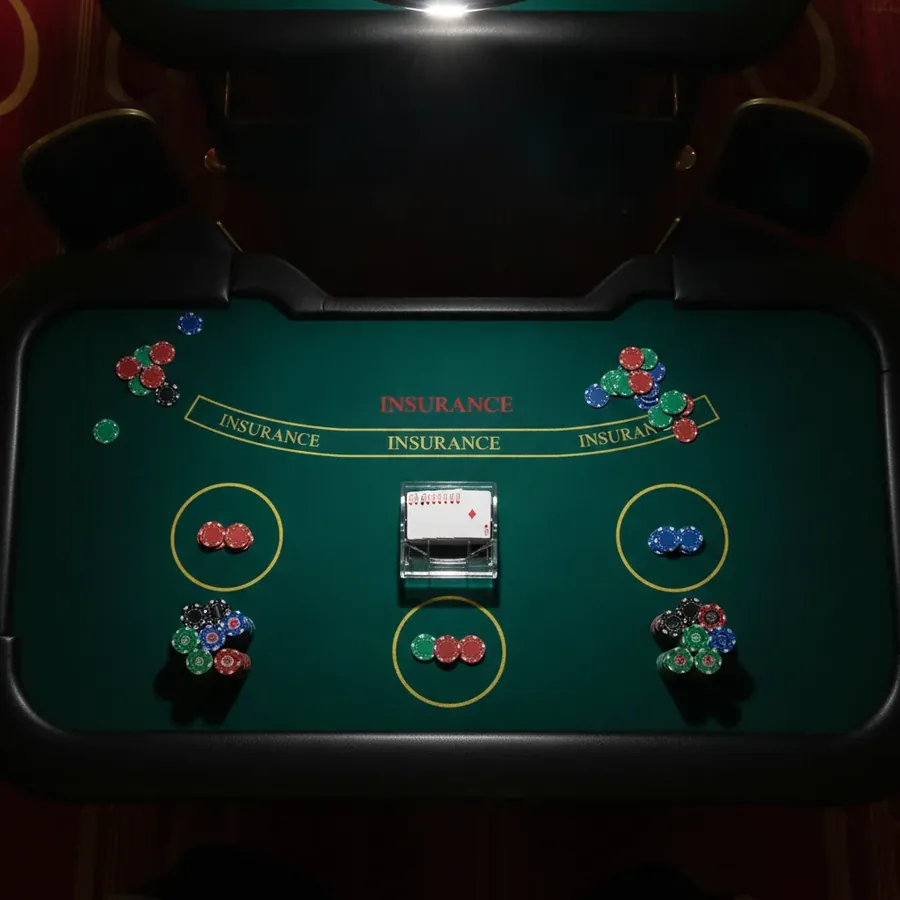
Seat change at the Live Table in 20 seconds
Lightning Blackjack by Evolution allows unlimited players to join a table with bets ranging from 1 to 2,500 EUR. The game features lightning multipliers up to 25x on winning hands, targeting high-volume action. The RTP sits at 99.56%, but the volatility is significantly higher due to the random multiplier mechanics. Fast seat changes are essential here because the bonus rounds depend on immediate participation.
Quantum Blackjack Plus by Playtech supports even larger stakes, accepting bets between 1 and 5,000 EUR. Quantum multipliers can reach 1,000x on three-card combinations totaling 21 points, creating massive potential payouts. The RTP is 99.57% under optimal strategy, but the variance is extreme for high rollers. Quick transitions between seats allow players to capitalize on different dealer patterns or multiplier opportunities.
Table availability and speed are critical for high-stakes live dealers who cannot afford downtime between sessions. The 20-second window ensures that VIP players can move between Lightning and Quantum tables without losing their betting rhythm. Standard blackjack party tables have lower limits, capping at 1,000 EUR with two moderators. This restriction makes them less suitable for serious high-roller strategies requiring maximum stake flexibility.
Stand-on-17 Rule and Its Meaning for Players
The Stand-on-17 (S17) rule requires the dealer to stand on all 17s, including soft 17, which benefits the player. In contrast, Hit-on-17 (H17) rules increase the house edge by 0.22 percentage points as the dealer must draw more cards. Liberal Vegas Strip tables typically feature S17, contributing to their low 0.28% house edge. This rule is a key differentiator for high rollers seeking to minimize the casino's statistical advantage.
Base strategy calculations assume S17 when determining optimal plays for double-downs and splits. Tables using H17 force players to adjust their strategy, often leading to suboptimal decisions if not adjusted correctly. The difference between 99.54% RTP (S17) and lower variants highlights the impact of this single rule. High rollers relying on precise mathematical models must verify the dealer rule before sitting down.
Insurance bets become even less attractive when the dealer stands on soft 17, as the probability of a hidden ten-value card remains constant. The house edge on insurance is 7.47% regardless of the S17 or H17 rule, making it a poor side bet. However, the overall game RTP improves slightly with S17, preserving more of the initial bankroll over time. Players should prioritize S17 tables to ensure their base strategy remains mathematically sound.
Bonus conditions often exclude Blackjack completely
The welcome bonus offers 300% up to 2,000 EUR plus 100 free spins, but table games contribute only 10% toward wagering. This low contribution rate makes clearing the bonus extremely difficult for high rollers who prefer blackjack over slots. Slots count 100%, forcing players to switch games to meet the turnover requirements efficiently. This structure penalizes strategic players who rely on low-house-edge table games.
High rollers betting 100 EUR per hand on blackjack generate only 10 EUR toward the wagering requirement. To clear a 40x wagering on a 2,000 EUR bonus, a player would need 80,000 EUR in turnover, requiring 8,000 EUR in actual blackjack bets. This creates a bottleneck that discourages high-stakes table play during the bonus period. The discrepancy between slot and table contributions distorts the intended use of the promotional funds.
The exclusion of full table game eligibility shifts the player behavior toward high-volatility slots. While slots offer faster clearance, they carry a higher house edge than optimized blackjack strategies. High rollers may find the bonus terms unfavorable due to the restricted game access and low contribution rates. Understanding these limitations is crucial for managing expectations around bonus utility and effective bankroll management.
Blackjack Payout 3:2 Explained in Detail
A 3:2 payout on a natural blackjack means the player receives 1.5 times their original bet as profit. For a 100 EUR wager, this results in a 150 EUR win, whereas a 6:5 payout yields only 120 EUR. The difference of 30 EUR per hand represents a significant loss over thousands of deals for high rollers. This rule change adds 1.39 percentage points to the house edge, drastically altering the game's economics.
Single-deck blackjack with classic rules and 3:2 payouts offers an impressive RTP of 99.85% and a house edge of just 0.15%. This variant provides the best possible return for skilled players who can manage the deck penetration effectively. The advantage is approximately 0.48 percentage points lower than playing with eight decks. High rollers should seek out these rare configurations to maximize their long-term profitability.
Late surrender allows players to forfeit half their bet after the dealer checks for blackjack, improving RTP by 0.08 percentage points. Early surrender, worth up to 0.6 percentage points, is rarely offered but highly valuable when available. Combining surrender with 3:2 payouts and liberal rules creates the most player-friendly environment. Without these elements, the inherent house edge becomes too steep for consistent high-stakes success.
Blackjack variants at a glance
| Variant | Payout | House edge | Rule | Bet range |
|---|---|---|---|---|
| Blackjack Auszahlung 6:5 statt 3:2 (6 Decks) | 98.15% | 1.85% | Ersatz von 3:2 durch 6:5 fügt exakt +1.39 Prozentpunkte zum Vorteil des Casinos hinzu – stärker als jede andere Regeländerung. Bei $10 Einsatz zahlt Blackjack $12 statt $15. | Blackjack 6:5, Gewinn 1:1 |
| Blackjack Insurance / Versicherung (6–8 Decks) | 92.53% | 7.47% | Separate Nebenwette bis 50% der Hauptwette, wenn der Dealer ein Ass hat. Basisstrategie schreibt IMMER Ablehnung vor (außer Karten zählen bei True Count ≥ +3). Bei einem Deck Vorteil ≈ 5.88% | Insurance 2:1 |
| Blackjack Ein Deck, klassische Regeln, 3:2 | 99.85% | 0.15% | Weniger Decks = niedrigerer Vorteil; ein Deck gibt ca. −0.48 Prozentpunkte gegenüber 8 Decks. Oft durch 6:5 Auszahlung kompensiert. | Blackjack 3:2, Gewinn 1:1 |
| Blackjack Surrender (Late Surrender) – Regel-Effekt | n.a. (Regel-Modifikator) | −0.08 Prozentpunkte | Spieler gibt Hand nach Dealer-Blackjack-Prüfung auf, verliert die Hälfte des Einsatzes. Verbessert RTP um ca. 0.08 Prozentpunkte. Early Surrender ist wesentlich wertvoller (bis −0.6 Prozentpunkte), aber extrem selten. | Rückzahlung 50% des Einsatzes |
| Blackjack 6 Decks, S17, DAS, DOA, Auszahlung 3:2, Basisstrategie | 99.54% | 0.46% | Dealer steht auf Soft 17; Verdopplung auf jeder Zweierkarte; Verdopplung nach Split erlaubt; keine Aufgabe. Basisstrategie ist für diesen Wert zwingend | Blackjack 3:2, normaler Gewinn 1:1, Insurance 2:1 |
| Blackjack Liberal Vegas Strip (liberale Regeln, 3:2) | 99.72% | 0.28% | Günstigste Regelkombination: S17 + DAS + Resplit + Late Surrender. Standardabweichung 1,15 | Blackjack 3:2, Gewinn 1:1 |
Continuous Shuffling Machine shuffles after each round
The Lightning Blackjack table at Evolution operates with a specific betting range from 1 to 2,500 EUR, accommodating high stakes for professional players. This upper limit allows significant exposure per hand compared to standard tables, which typically cap much lower for recreational users. The continuous shuffling mechanism ensures rapid game velocity, maximizing the number of decisions per hour for those managing large bankrolls.
Quantum Blackjack Plus Live by Playtech extends the maximum stake further to 5,000 EUR, providing a higher ceiling for aggressive wagering strategies. Players can apply optimal strategy here to achieve an RTP of 99.57%, slightly outperforming other live variants in mathematical efficiency. The elevated limits combined with favorable odds create a distinct environment for serious investors seeking maximum return on investment over time.
Evolution also offers Blackjack Party with a more modest maximum bet of 1,000 EUR, featuring two moderators to maintain a lively atmosphere. While the stake cap is lower than the quantum variant, the structured pacing suits players who prefer controlled volatility over extreme speed. The presence of hosts adds a layer of entertainment without altering the underlying mathematical expectations or the house edge calculations.
Insurance vs Even Money on Own Blackjack
Blackjack Insurance is a separate side bet available when the dealer shows an Ace, costing up to 50% of the original wager. This option carries a severe house edge of 7.47% and an RTP of only 92.53%, making it mathematically unfavorable for most participants. Professional analysts consistently recommend rejecting this insurance unless the player employs advanced card counting techniques with a true count of plus three or higher.
Even money serves as a simplified insurance mechanism specifically triggered when the player holds a natural blackjack against a dealer Ace. Accepting even money guarantees a 1:1 payout immediately, effectively locking in the profit while surrendering the potential for a 3:2 win. This decision removes all variance from the outcome, ensuring a fixed return regardless of whether the dealer reveals a ten-value card underneath.
The standard payout for a natural blackjack is 3:2, meaning a 100 EUR bet yields 150 EUR in winnings upon success. Choosing even money instead reduces this potential gain to 100 EUR, sacrificing 50 EUR in expected value to eliminate risk entirely. High rollers must weigh this immediate certainty against the long-term statistical disadvantage inherent in accepting reduced payouts on winning hands.
If the dealer does not possess a ten-card hole, the player forfeits the entire original bet when opting for even money on a natural. This scenario highlights the cost of insurance-like decisions, as the guaranteed smaller win replaces the larger potential payout that would have occurred naturally.
Splitting costs double bet: plan budget
The rules permit splitting pairs into up to four separate hands, requiring the player to match the original wager for each new creation. A single split doubles the total action on the table, immediately increasing the financial exposure and the required bankroll for the session. This mechanic amplifies both the potential rewards and the associated risks for high-stakes players managing their capital allocation carefully.
Resplitting Aces improves the Return to Player by approximately 0.08 percentage points, offering a marginal mathematical advantage to skilled strategists. However, this benefit comes with the constraint that players usually receive only one additional card on each split ace, limiting subsequent playing options. The combination of doubled bets and restricted follow-up cards demands precise decision-making to maximize the theoretical return over many hands.
Double After Split (DAS) provides a further improvement of about 0.14 percentage points to the overall game statistics for the participant. This rule allows doubling down on any hand resulting from a split, adding strategic depth and opportunities to increase profits aggressively. Understanding these cumulative rule effects is essential for calculating the true house edge and optimizing betting patterns accordingly during play.
Players must verify if the specific table allows DAS, as its absence significantly alters the optimal strategy and expected value of split hands. Without this flexibility, the mathematical expectation decreases, forcing adjustments in how wagers are managed across multiple derived hands from initial pairs.
When can you increase your bet?
High rollers can place substantial wagers on Lightning Blackjack, where the maximum bet reaches an impressive 2,500 EUR per round. This limit allows for significant capital deployment during single hands, catering to players who operate with large dedicated gaming funds. The ability to escalate stakes quickly within a single session requires careful monitoring of the remaining bankroll and loss limits.
Playtech Quantum Blackjack Plus Live offers an even higher threshold, permitting bets up to 5,000 EUR for each individual deal. Such elevated limits enable massive exposure per decision, drastically impacting the variance and potential swings in a player's account balance. Participants must ensure their financial resources can withstand the heightened volatility associated with these maximum stake levels effectively.
Standard tables like Blackjack Party restrict the maximum stake to 1,000 EUR, providing a more conservative approach for high-volume play. While lower than the lightning variants, this limit still supports serious wagering strategies without the extreme pressure of five-figure rounds. Players should select the appropriate table based on their risk tolerance and the specific volatility profile they wish to engage with.
The minimum bet of 1 EUR on these live tables ensures accessibility, but high rollers focus on the upper bounds of these ranges. Maximizing utility involves understanding how each limit interacts with the game speed and the multiplier features present in the specific variant chosen.
Soft Hand and Hard Hand Practically Distinguished
A soft hand contains an Ace counted as eleven without busting, allowing the player to hit without immediate risk of exceeding twenty-one. This flexibility permits aggressive doubling strategies, particularly under rules that allow Double After Split or unrestricted doubling on any two cards. Utilizing this advantage correctly can reduce the house edge significantly, especially when the dealer shows a weak upcard like a six.
Hard hands lack this protective Ace, meaning any card valued at ten or higher will cause an immediate bust if the total exceeds twenty-one. Strategies for hard hands are generally more rigid, focusing on standing on strong totals or hitting cautiously on marginal ones. Misjudging the strength of a hard hand often leads to unnecessary losses, whereas soft hands offer recovery opportunities through additional draws.
The distinction directly influences the house edge, with liberal rules like S17 and Late Surrender improving the player's position by reducing the casino's advantage. For instance, late surrender can decrease the house edge by 0.08 percentage points, a valuable tool when holding a weak hard hand. Mastering the difference between these hand types is crucial for maintaining the theoretical RTP close to the optimal 99.72% available on favorable tables.
How long do 100 EUR last at a 1 EUR table?
The Lightning Blackjack table at Evolution allows minimum bets of 1 EUR, enabling a player to place exactly 100 hands before the bankroll is exhausted.
This volume contrasts sharply with the Quantum Blackjack Plus Live limit of 5.000 EUR, which would deplete the same stake in a single wager if fully utilized.
Consequently, a budget of 100 EUR provides sufficient duration for extended play on standard tables rather than high-stakes environments requiring larger capital reserves.
The unlimited player count on these tables ensures that seat availability does not interrupt the gameplay session or force alternative betting strategies.
Blackjack doesn't count for every bonus offer
The 300% welcome bonus up to €2,000 applies specifically to slot games, which contribute 100% toward the required turnover conditions.
In contrast, blackjack contributes only 10% to the wagering requirement, drastically reducing the efficiency of using this game type to clear the bonus funds.
A player depositing 2,000 EUR and receiving a 6,000 EUR bonus must generate 240,000 EUR in total turnover, a task significantly harder when relying on low-contribution table games.
High rollers seeking to utilize table games for bonus clearance face substantial restrictions due to this disproportionate contribution ratio compared to slots.
Card Counting at Shuffle Master Table: why it fails
Shuffle Master technology is employed in many live dealer environments to continuously shuffle cards, effectively neutralizing any advantage gained from card counting strategies.
While theoretical rules like Late Surrender can reduce the house edge by 0.08 percentage points, these benefits are rendered irrelevant when the deck composition is constantly randomized.
Players cannot track favorable decks because the continuous shuffling mechanism prevents the accumulation of a positive true count necessary for profitable betting adjustments.
The RTP of 99.56% on Lightning Blackjack remains static regardless of player skill, as the random number generation replaces traditional deck penetration methods.
Highroller from 500 EUR per hand
The Quantum Blackjack Plus Live table supports wagers up to 5.000 EUR, accommodating high rollers who require significant betting limits for their strategies.
This maximum limit is five times higher than the 1.000 EUR cap found on the Evolution Blackjack Party table, offering greater flexibility for large-scale betting plans.
High stakes allow for rapid bankroll movement, where a single losing hand of 500 EUR represents a substantial portion of typical recreational budgets.
The presence of multipliers up to 1.000x on three-card combinations adds volatility, making high-limit play both potentially lucrative and highly risky.
Blackjack Contributes Only 10 Percent to Wagering
Table games such as blackjack contribute merely 10% to the wagering requirement, whereas slot machines contribute 100%, creating a steep disparity in bonus clearing speed.
To clear a 2,000 EUR bonus with a 40x wagering requirement, a player must generate 80,000 EUR in slot bets but 800,000 EUR in blackjack bets.
This mathematical reality forces players to choose between playing their preferred table games and actually unlocking the withdrawn bonus funds without restriction.
The low contribution rate makes blackjack an inefficient vehicle for meeting bonus terms, encouraging players to allocate more funds to slot games instead.
Contact
Live - online chat
Banking









Providers












Rakoo Casino 2024